How to Check a Malta Gaming Licence (And Why the Brand Name Isn't the Company)
Published
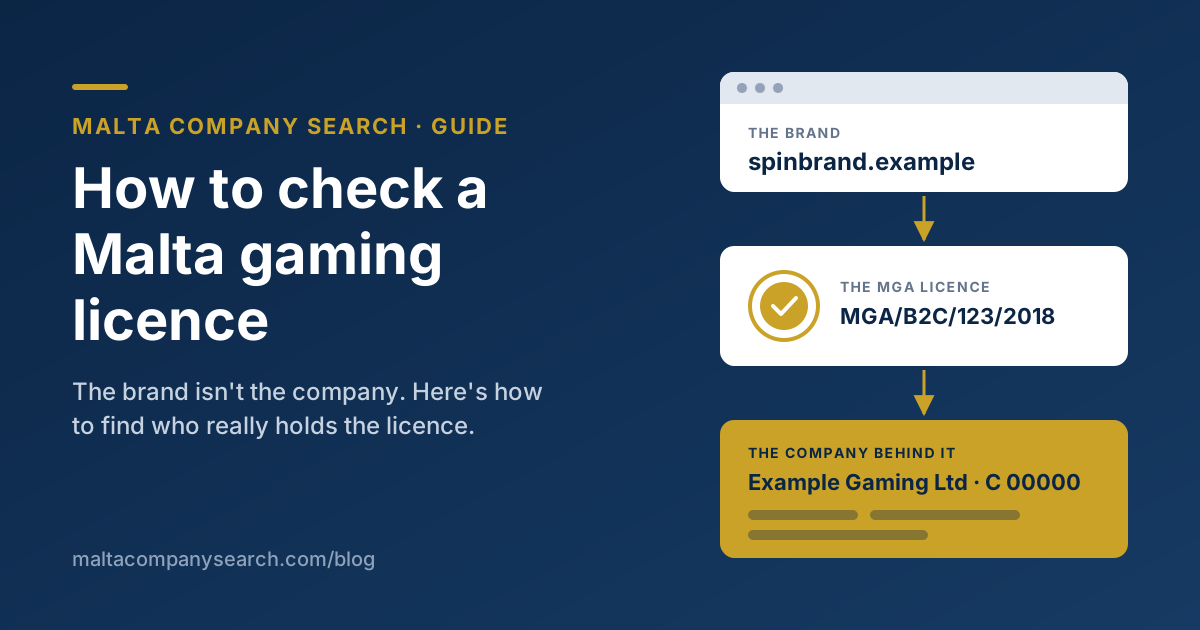
Type a casino or betting brand into the Malta Gaming Authority's register and you'll often draw a blank — not because the brand is unlicensed, but because the register lists the legal entity, not the trading name. When the MGA announced bet365's sports betting licence in 2015, the licensee was a company called Hillside (New Media Malta). Today the register shows that particular licence as expired, alongside several other Hillside entities. If all you knew was the brand, none of that would be obvious.
That gap between brand and company is the biggest source of confusion when people try to verify an MGA licence. This guide explains what an MGA licence covers, how to read the official register correctly, and how to find the real company behind a brand before you deposit, sign a contract or do business with it.
Key takeaways
- MGA licences are either B2C “Gaming Service” licences for operators facing players, or B2B “Critical Gaming Supply” licences for platform, game and software suppliers. Groups can also hold one corporate licence across several companies.
- The register is searchable by licence number and company name, but brand names and licensed entities frequently don't match.
- A licence tells you nothing about who owns or runs the company. For that you need the company register — and Malta Company Search shows both on one page.
B2C, B2B and corporate licences
Under Malta's Gaming Act (Cap. 583), remote gaming licences come in two main types, and they are not interchangeable.
B2C (Gaming Service) licences are for operators offering games or betting directly to players. Each licence lists the game types it covers:
- Type 1 — casino-type games of chance played against the house, decided by a random number generator — slots, RNG table games, lotteries.
- Type 2 — fixed-odds betting against the house on an outcome the operator doesn't control, such as sports betting.
- Type 3 — games not played against the house, where the operator takes a commission — poker, peer-to-peer games, betting exchanges, bingo.
- Type 4 — controlled skill games, where skill rather than chance mainly decides the result.
B2B (Critical Gaming Supply) licences are for companies supplying gaming platforms, game content or RNG systems to other operators. A B2B licensee doesn't take player money directly; it supplies the infrastructure operators run on.
You'll also see licence numbers beginning MGA/CRP. These are corporate group licences: one licence held by a group's parent that covers the gaming companies beneath it, each of which is then treated as part of the licensee.
As of 6 October 2026, the register held 313 licences with the status “Licensed” — 159 B2B, 106 B2C and 48 corporate — out of 586 listed in total, including surrendered, cancelled and expired ones.
| Category | Licences |
|---|---|
| B2BCritical gaming supply | 159 |
| B2CGaming service | 106 |
| CRPCorporate group | 48 |
Why it matters: a company with only a B2B licence has no authority to accept players. A B2C licence covering only Type 1 doesn't cover sports betting. If what a site offers doesn't match the licence, it's operating outside its scope.
What the MGA register actually shows
The official MGA Licensee Register covers every licence, current or not. For each one it shows:
- Licensee — the exact legal entity name — not the brand — with its company registration number and registered address.
- Licence number — in the form MGA/B2C/123/2018: the class (B2C, B2B or CRP), a sequence number and the year it was issued.
- Game types — which of Type 1–4 a gaming service licence covers.
- Status — Licensed, Suspended, Voluntary Suspended, Surrendered, Cancelled or Expired, with a termination date where one applies.
- Group companies — for a corporate licence, the companies covered under the licence holder.
- Verification seal — a link to the MGA's own verification page for that licensee.
| Category | Licences |
|---|---|
| Licensed | 313 |
| Surrendered | 192 |
| Cancelled | 69 |
| Expired | 8 |
| Suspended | 2 |
| Voluntary Suspended | 2 |
How to verify a licence, step by step
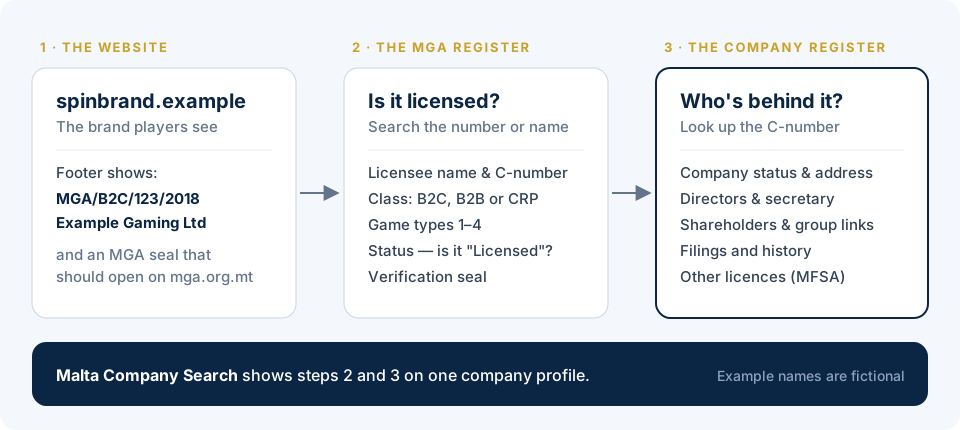
- Find the licence number, not just the brand. Legitimate operators publish their MGA licence number and the company name in the site footer or terms. If neither is there, treat that as your first warning.
- Search the register by number or company name. Use the official register yourself rather than a link the operator provides, and note the exact licensee name it returns.
- Read the status carefully. Only “Licensed” means the licence is in force. Surrendered, cancelled, expired and suspended licences all stay on the register, so a match by itself proves nothing.
- Match the scope to the activity. Check the class (B2C vs B2B) and game types against what the site actually offers.
- Click the seal. A genuine MGA seal opens a verification page on the MGA's own domain (authorisation.mga.org.mt). A static image, or a page on any other domain, is a red flag. The register doesn't list the domains a licence is used on, so the seal and the operator's own disclosures are how you connect a website to a licensee.
- Look the company up in a company register. This is the step most guides skip, and it's the one that tells you who you're actually dealing with.
What the register doesn't tell you
The MGA register answers one question: is this entity licensed to provide this type of gaming service? It doesn't tell you:
- who owns the licensed company, or who its shareholders are;
- who its directors are, and which other companies they sit on;
- whether the company itself is still active on the companies register, or has changed name or address;
- what it has filed, and whether it holds other licences — from the MFSA, for example.
That's why the MGA regularly warns about websites falsely claiming its licence: a licence number is just a reference, and nothing stops a bad-faith site from printing one it doesn't hold. Closing the gap means checking the company behind the licence, not just the licence.
Finding the company behind the licence
Most MGA licensees are Maltese companies: 291 of the 313 active licences on the register are held by companies with a Malta Business Registry number. That's where Malta Company Search comes in. We match the MGA register to Malta's company register by registration number, so a single company profile shows:
- Its MGA licences — licence number, class, game types, current status and termination date, with a link to the MGA verification seal.
- Licence history — changes we've recorded between checks of the register, such as a licence being suspended, cancelled or surrendered.
- Its company record — registration status, legal form, registered address, incorporation date and, where available, filed documents, from the Malta Business Registry.
- Its people and owners — directors, company secretary, legal representatives and shareholders — with corporate shareholders linked to their own company profiles, so you can follow a group's structure.
- Its other licences — any MFSA financial-services licences — see our guide to MFSA licence types.
The workflow is simple: get the licensee's exact name or company number from the MGA register (or the operator's footer), then search it on Malta Company Search. In one page you can confirm both that the licence is live and who stands behind the company holding it.
Two limits worth knowing: licensees registered outside Malta don't have a Maltese company record, so we can't match them; and like the MGA register, our search works on company names and numbers, not brand names.
FAQ
- Why doesn't a casino brand name show up on the MGA register?
- Because the register lists the licensed legal entity, not the trading name. The consumer-facing brand is usually operated by a company with a different name — sometimes a group company covered by a corporate licence held by its parent.
- What's the difference between a B2C and a B2B MGA licence?
- A B2C Gaming Service licence lets a company offer gaming directly to players, for the game types (Type 1 to 4) listed on the licence. A B2B Critical Gaming Supply licence lets a company supply gaming software, platforms or game content to other operators; it does not allow taking players directly.
- What does an MGA/CRP licence number mean?
- CRP numbers are corporate group licences: a single licence that covers a group's parent and the gaming companies under it, so each group company is treated as part of the licensee. The register names the licence holder and lists the group companies under it.
- How do I know if an MGA licence number is genuine?
- Enter the number on the official MGA Licensee Register yourself rather than trusting a logo or number on the operator's site, and check the status reads "Licensed". A genuine MGA seal should open a verification page on the MGA's own domain. The MGA regularly warns about websites falsely claiming its licence.
- Can one company hold multiple MGA licences?
- It's possible but uncommon: as of 6 October 2026, 5 of the 308 companies with an active licence held more than one. Groups more often hold one corporate licence covering several companies, and a single B2C licence can cover several game types.
- How do I find out who owns or directs a Malta-licensed gaming company?
- The MGA register doesn't show ownership, directors or shareholders. Take the licensee's exact name or company number from the register and look it up on Malta Company Search, which shows its Malta Business Registry record (status, directors, shareholders, registered address) together with its MGA and MFSA licences.
Register figures are as of 6 October 2026. This guide is general information, not legal advice; for anything binding, confirm a licence directly on the MGA's own register.